
Symmetric vs Asymmetric Encryption
Welcome to Symmetric vs. Asymmetric Encryption
Now you will learn why Encryption is a big part of Network Security!
**In this Video we will: **
- Present an overview of the two methods of encryption in use today.
- Describe and illustrate Symmetric and Asymmetric encryption.
- Explain the advantages and disadvantages of both methods of encryption.
- At the end of this lecture you will understand the difference between Symmetric and Asymmetric encryption.
**What is Encryption? **
Encryption is the process of encoding data to prevent unauthorized access.
There are two forms of encryption in common use today. Symmetric and Asymmetric.
With Symmetric Encryption
- There is only one key
- The same key encrypts and decrypts the data
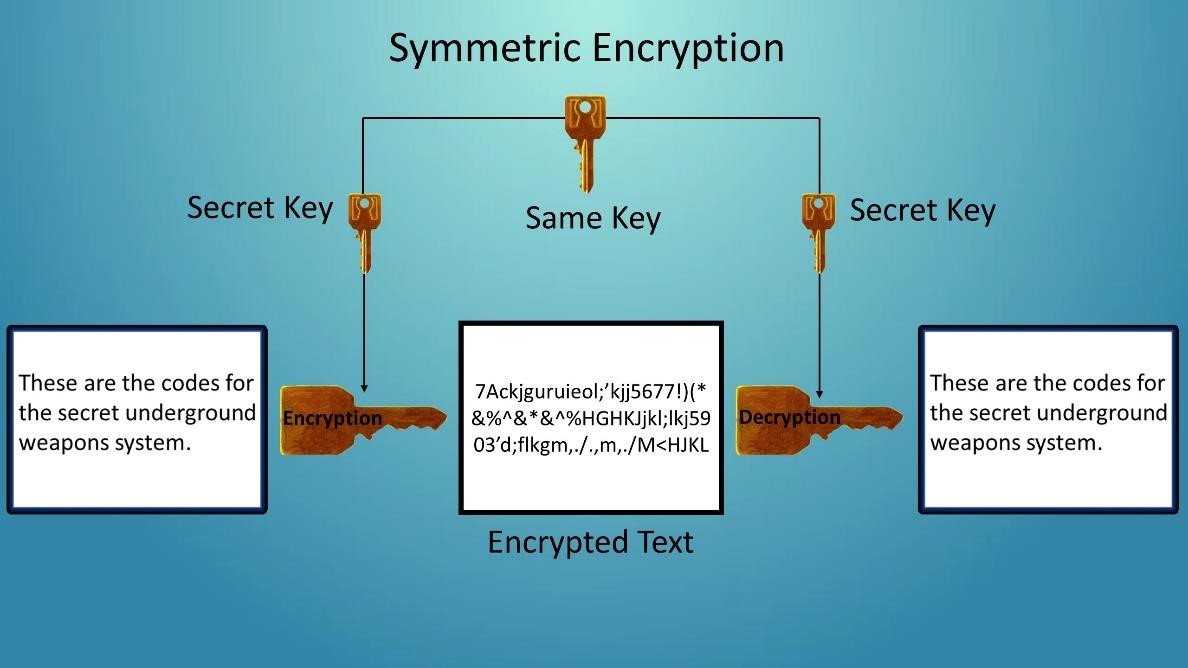
Here is a video describing Symmetric key encryption
Let’s say you want to send me an email. You encrypt the email using your secret key, you send me the key.
I receive the email and decrypt it using the same key.
The problems with Symmetric Encryption
- You must keep the key secret
- The key will need to be transferred to the other party
- Susceptible to attack – If a third party steals the key they will be able to decrypt the data and read the message.
Advantages of Symmetric encryption
• Very fast – The process of Symmetric Encryption is much faster than Asymmetric Encryption.
Asymmetric Encryption
- Consists of two keys (pairs)
- The public key can be shared, given away – Sent in an email, posted on a web site.
- The private key cannot be shared, keep it private
- The private key is the only key that can decrypt data encrypted with the public key.
- If someone encrypts data with the public key, the only way data could be decrypted is with the private key. That is why the private key must be kept private.
![](https://zrftqt…
No comments yet. Add the first comment to start the discussion.