
Platform as a Service
Describe Platform as a Service (PaaS)
In this lesson, you will learn about Platform as a Service (PaaS), which strikes a balance between renting space in a datacenter (IaaS) and paying for a fully deployed solution (SaaS). PaaS provides a comprehensive development environment without the hassle of maintaining the underlying infrastructure.
What is PaaS?
Platform as a Service (PaaS) is a cloud computing model where the cloud provider handles the physical infrastructure, physical security, and internet connectivity. Additionally, they manage the operating systems, middleware, development tools, and business intelligence services. This setup allows you to focus on developing and deploying applications without worrying about licensing or patching for operating systems and databases.
Shared Responsibility Model
The shared responsibility model in PaaS splits responsibilities between you and the cloud provider. While the cloud provider maintains the physical infrastructure, operating systems, databases, and development tools, you are responsible for managing your applications and data.
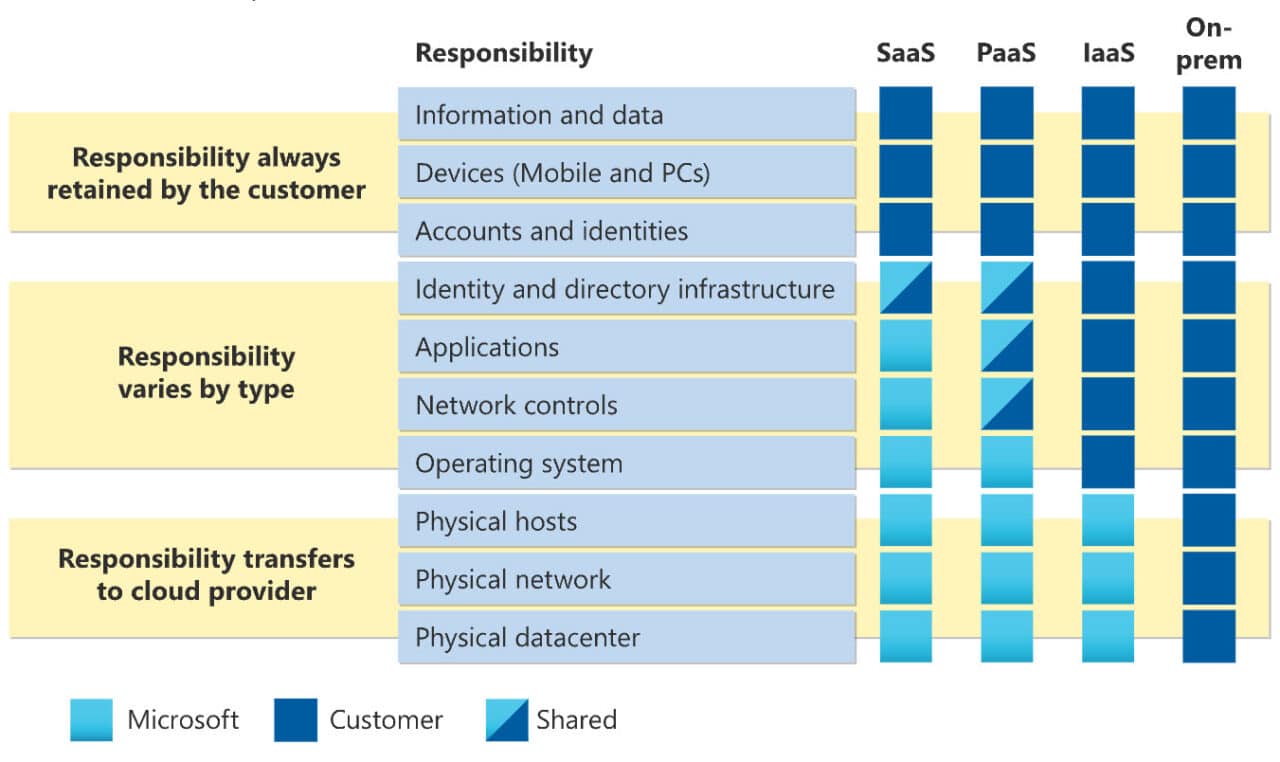 Azure Shared Responsibility Model
In the PaaS model, the cloud provider ensures the platform is up-to-date with regular updates, patches, and refreshes. Depending on the configuration, you or the cloud provider may manage networking settings, connectivity, network security, and directory infrastructure.
Scenarios for PaaS
PaaS is suitable for several common scenarios:
- Development Framework : PaaS provides a robust framework for developers to build or customize cloud-based applications. It includes built-in software components, reducing the amount of coding required. Features like scalability, high availability, and multi-tenant capability are included, streamlining the development process.
- **Analytics…
No comments yet. Add the first comment to start the discussion.